How to Solve Drainage Issues Before Spring Rains Hit
May 20, 2026
Drainage problems usually stay hidden until the first heavy rain exposes them. Water pooling around foundations, flooded crawlspaces, washed out landscaping, and muddy job sites often trace back to grading or drainage issues that could have been fixed earlier.
Late winter and early spring are usually the best times to correct these problems. The ground is workable, contractors have better access to job sites, and you avoid emergency repairs once storms arrive. Whether you manage properties, run construction crews, or are handling a large DIY project, addressing drainage early helps keep projects on schedule and prevents costly rework.
Below, we break down the most common drainage problems, the equipment typically used to fix them, and what to consider before renting.
What Usually Causes Drainage Problems
Drainage failures rarely come from one issue. Most job sites have a combination of grading, soil, and runoff challenges.
Improper Grading Around Structures
Water should always flow away from foundations. Over time, soil settles or landscaping changes redirect water back toward buildings. Even small grading mistakes can allow water to collect along foundations and eventually move inside.
A common rule contractors follow is maintaining about six inches of fall within the first ten feet away from a structure. If that slope is missing, grading corrections are usually the first step.
Clogged or Failed French Drains
French drains often fail because of sediment buildup, crushed pipe, or improper installation depth. Older systems frequently lack filter fabric, which allows surrounding soil to clog gravel and pipe openings.
Roof Runoff Dumping Water in the Wrong Area
Downspouts that discharge next to foundations are one of the most common drainage mistakes we see. Roof runoff moves a large volume of water quickly, and short extensions overwhelm grading improvements.
Low Spots and Poor Yard Drainage
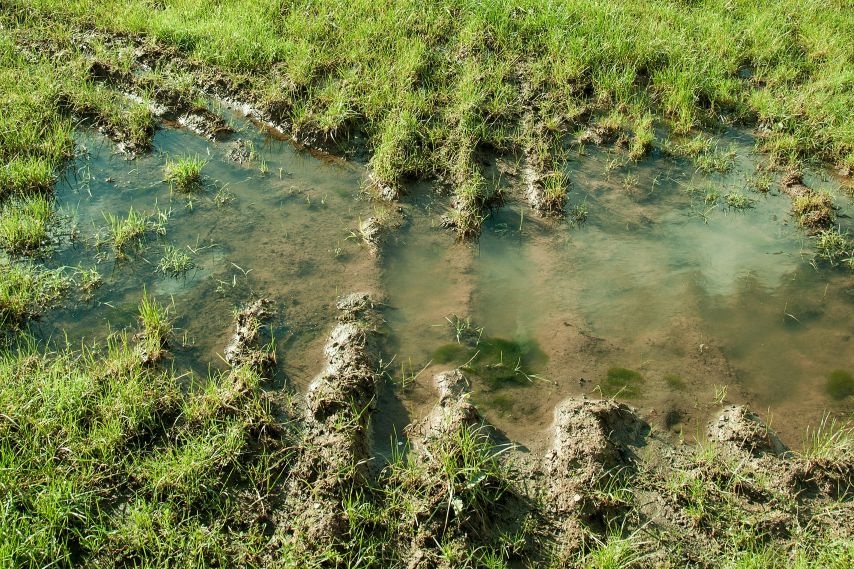
Depressions in soil collect water and prevent proper absorption. These areas usually develop after construction, heavy equipment traffic, or poorly compacted backfill.
Which Equipment Works Best for Drainage Repairs
Drainage work typically requires excavation, trenching, grading, water removal, and soil compaction. Matching equipment to the job keeps labor down and helps prevent damage to finished areas.
Mini Excavators for Precision Excavation
Mini excavators are one of the most versatile tools for drainage work. Contractors rely on them for installing French drains, regrading around foundations, digging swales, and placing catch basins or dry wells. They are strong enough to handle trenching and soil removal while still fitting into tight residential yards and confined commercial spaces where larger machines would cause unnecessary disruption.
Mini excavators are especially helpful when the job involves working close to structures or landscaping features that need to stay intact. They can move slower than trenchers when installing long straight pipe runs, but they give you more control when precision matters.
See our available mini excavators
on our rental site.
Trenchers for Long Drainage Lines
When a drainage project involves installing pipe across longer distances, trenchers often speed up the process significantly. Contractors commonly use them for downspout extensions, French drain laterals, and landscape drainage systems. A trencher cuts consistent, narrow trenches that reduce surface disruption and help crews install pipe quickly without removing unnecessary soil.
Trenchers work best when the trench path is fairly straight and the soil is manageable. Heavily rooted or rocky soil can slow progress, and tight turns or complex layouts may still require excavation equipment.
See our available trenchers on our rental site.
Skid Steers and Track Loaders for Grading and Material Handling
Grading often determines whether drainage repairs succeed or fail. Skid steers and compact track loaders allow crews to reshape slopes, move aggregate, spread soil, and complete finish grading efficiently. They are often the machine that ties the entire drainage project together once trenching and installation are complete.
Track loaders tend to perform better when the ground is soft or wet because they distribute weight more evenly and provide better traction. Wheeled skid steers are often faster on firm surfaces and can work well when soil conditions are stable. Choosing between them usually depends on ground moisture and jobsite terrain.
Pumps for Removing Standing Water
Many drainage projects begin with water that is already pooling in low areas, basements, or trenches. Pumps allow crews to remove that water so excavation and grading can begin safely. Submersible pumps are commonly used in confined or basement spaces, while trash pumps are designed to handle muddy water that contains debris.
Pumps are often the first piece of equipment on site because drainage repairs rarely hold up if crews are working in standing water. They solve the immediate access problem but still need to be paired with permanent drainage improvements.
See our available pumps
on our rental site.
Compaction Equipment to Prevent Future Settling
Drainage systems often fail because soil settles after installation. Plate compactors and rammers help stabilize trenches and regraded areas by compressing soil layers during backfill. Proper compaction helps maintain slope and prevents voids that allow water to return to problem areas.
Compaction adds time to a project, but skipping it often leads to callbacks once soil settles and grading reverses.
Common Drainage Equipment Mistakes We See
One common mistake is renting equipment that is too small. While it may seem easier to maneuver, undersized equipment often slows trenching and grading, increasing labor time.
Another frequent issue is choosing equipment that is too large for the jobsite. Oversized machines can damage landscaping and make maneuvering difficult in tight spaces.
We also see drainage repairs fail when discharge locations are not planned properly. Moving water away from one area does not help if it creates a new problem elsewhere. Skipping soil compaction is another issue that leads to drainage failure within the first year.
Practical Takeaways Before You Start a Drainage Project
Drainage work is usually successful when contractors:
-
Evaluate water flow before excavation begins
-
Fix roof runoff and downspout discharge first
-
Match excavation equipment to access and soil conditions
-
Install sub-surface drainage when grading alone is not enough
-
Compact backfill thoroughly
-
Confirm water discharge will not create new drainage problems
Planning ahead helps projects stay safer, faster, and more predictable.
We Can Help You Plan Drainage Work Before Problems Start
Drainage projects usually go smoother when equipment, timing, and site conditions are planned together instead of figured out mid-job.
If you are preparing for spring rains, our team at A-Z Rentals can help you choose the right equipment, recommend sizing based on your jobsite, and help you plan rental timing so your crew is not waiting on tools or dealing with avoidable delays.
You can explore available drainage and excavation equipment here: https://shop.a-zrentals.com/equipment-rentals
If you would rather talk through the job, stop by, call us, or request delivery. We are happy to walk through your project details and help you line up the equipment that keeps your work moving safely and efficiently.